
bri: China rebranding BRI to rival Biden’s B3W with focus on green finance, inclusive development
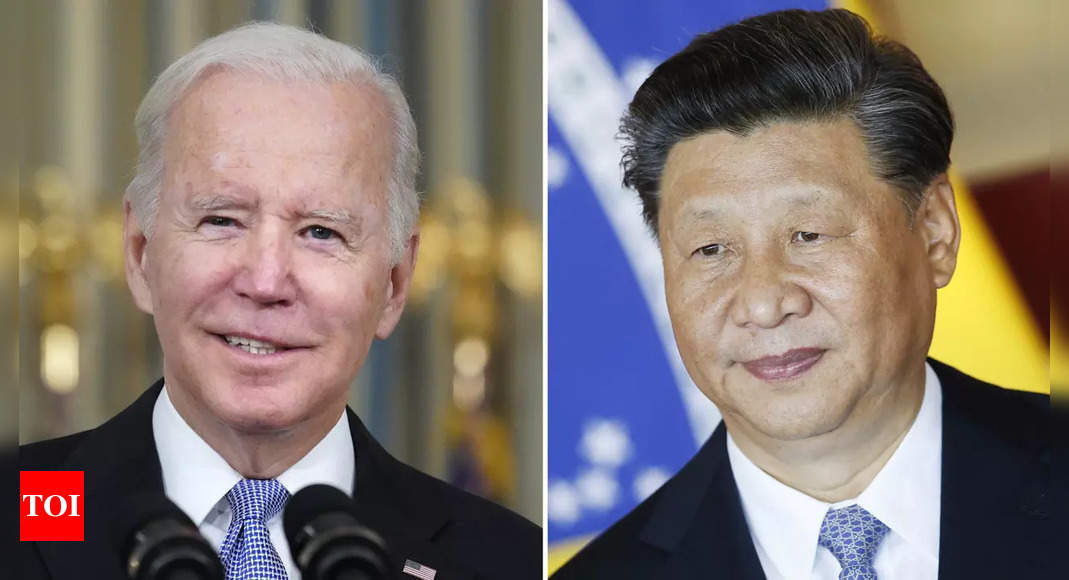

BEIJING: China appears to be rebranding its multi-billion-dollar Belt and Road Initiative (BRI), bracing for competition with US President Joe Biden‘s Build Back Better World (B3W) initiative, which lays emphasis on transparency and democratic values.
When B3W was unveiled by Biden during the G-7 summit in June, with the goal of creating “a values-driven, high-standard and transparent infrastructure partnership” to help finance projects in developing countries, China played down any competition, saying that BRI is open for international cooperation.
China welcomes various countries to participate in BRI and remains open to international cooperation conducive to enhancing connectivity and realising common development, Han Wenxiu, a senior official with the ruling Communist Party of China for Financial and Economic Affairs told a media briefing here on Friday, highlighting the deliberations of the Plenum meeting of the party, which has cleared the decks for Chinese President Xi Jinping‘s record third five-year tenure.
Asked how China views the B3W as a rival to the BRI, Han said at present, there is a huge gap in infrastructure investment in the world, especially in developing countries, and BRI will not be a solo act for China but a real chorus for all countries to get involved.
Han said the trade volume between China and BRI partners exceeded $9.2 trillion in 2020, while direct investment by Chinese companies in countries involving the Belt and Road Initiative has nearly touched $140 billion.
A pet initiative of President Xi, the BRI was launched in 2013 to fund infrastructure projects in the world, taking advantage of China’s massive $3.21 trillion forex reserves to further Beijing’s global influence.
Since then, the $60 billion China Pakistan Economic Corridor (CPEC) connecting China’s Xinjiang with Pakistan’s Gwadar Port has emerged as the flagship project over which India has raised protests as it is being laid through Pakistan-occupied Kashmir.
However, the lack of transparency of BRI agreements and mounting debt to China by smaller countries have raised global concerns.
The 99-year lease of the Hambantota port in Sri Lanka to China has raised red flags about the downside of the BRI and Beijing’s push for major infrastructure projects costing billions of dollars in smaller countries.
Analysts have cautioned Beijing about the US successfully pushing its B3W plan to counter the BRI.
Commenting on the B3W, Shi Yinhong, a US relations specialist at Beijing’s Renmin University, said the US plan was “not good news for China”.
“All of the stated goals of the B3W, described as a values-driven, transparent and sustainable infrastructure partnership, are obviously targeting China,” Shi told the Hong Kong-based South China Morning Post.
Highlighting the BRI’s new strategy, Han said “we should make sure that BRI adapts to new circumstances and new vitality”.
“First, we will lay great emphasis on green belt and road development” giving importance to green infrastructure, green energy and green finance, the senior CPC official said.
New railway projects being undertaken under the BRI ensure animal passages, he said.
President Xi announced in his recent address to the UN that China will not build new coal-fired power projects abroad.
“It is a major decision in response to climate change,” Han said.
He said China will lay greater emphasis on the sustainable development of BRI cooperation.
“We have published a debt sustainability framework and follow the debt sustainability principle, putting the policy system for debt risk prevention and control and enhancing the quality of the investment,” he said.
Also “we will lay greater emphasis on inclusive development of BRI cooperation”, he explained.
“We will support BRI countries in growing the digital economy, closing the digital divide, strengthening cooperation on innovation and sharing experience of a new round of scientific and tech revolution in industrial transformation,” Han added.
When B3W was unveiled by Biden during the G-7 summit in June, with the goal of creating “a values-driven, high-standard and transparent infrastructure partnership” to help finance projects in developing countries, China played down any competition, saying that BRI is open for international cooperation.
China welcomes various countries to participate in BRI and remains open to international cooperation conducive to enhancing connectivity and realising common development, Han Wenxiu, a senior official with the ruling Communist Party of China for Financial and Economic Affairs told a media briefing here on Friday, highlighting the deliberations of the Plenum meeting of the party, which has cleared the decks for Chinese President Xi Jinping‘s record third five-year tenure.
Asked how China views the B3W as a rival to the BRI, Han said at present, there is a huge gap in infrastructure investment in the world, especially in developing countries, and BRI will not be a solo act for China but a real chorus for all countries to get involved.
Han said the trade volume between China and BRI partners exceeded $9.2 trillion in 2020, while direct investment by Chinese companies in countries involving the Belt and Road Initiative has nearly touched $140 billion.
A pet initiative of President Xi, the BRI was launched in 2013 to fund infrastructure projects in the world, taking advantage of China’s massive $3.21 trillion forex reserves to further Beijing’s global influence.
Since then, the $60 billion China Pakistan Economic Corridor (CPEC) connecting China’s Xinjiang with Pakistan’s Gwadar Port has emerged as the flagship project over which India has raised protests as it is being laid through Pakistan-occupied Kashmir.
However, the lack of transparency of BRI agreements and mounting debt to China by smaller countries have raised global concerns.
The 99-year lease of the Hambantota port in Sri Lanka to China has raised red flags about the downside of the BRI and Beijing’s push for major infrastructure projects costing billions of dollars in smaller countries.
Analysts have cautioned Beijing about the US successfully pushing its B3W plan to counter the BRI.
Commenting on the B3W, Shi Yinhong, a US relations specialist at Beijing’s Renmin University, said the US plan was “not good news for China”.
“All of the stated goals of the B3W, described as a values-driven, transparent and sustainable infrastructure partnership, are obviously targeting China,” Shi told the Hong Kong-based South China Morning Post.
Highlighting the BRI’s new strategy, Han said “we should make sure that BRI adapts to new circumstances and new vitality”.
“First, we will lay great emphasis on green belt and road development” giving importance to green infrastructure, green energy and green finance, the senior CPC official said.
New railway projects being undertaken under the BRI ensure animal passages, he said.
President Xi announced in his recent address to the UN that China will not build new coal-fired power projects abroad.
“It is a major decision in response to climate change,” Han said.
He said China will lay greater emphasis on the sustainable development of BRI cooperation.
“We have published a debt sustainability framework and follow the debt sustainability principle, putting the policy system for debt risk prevention and control and enhancing the quality of the investment,” he said.
Also “we will lay greater emphasis on inclusive development of BRI cooperation”, he explained.
“We will support BRI countries in growing the digital economy, closing the digital divide, strengthening cooperation on innovation and sharing experience of a new round of scientific and tech revolution in industrial transformation,” Han added.
동현 배(Dong-hyun Bae)는 UlsanFocus.com의 필진으로, 지역 및 국내 주요 뉴스는 물론 정치, 경제, 기술, 스포츠, 문화·연예, 라이프스타일 등 다양한 분야를 다루고 있습니다. 독자들이 이해하기 쉬운 명확한 보도와 신뢰할 수 있는 정보 전달을 중요하게 생각하며, 시의성 있는 이슈와 일상에 도움이 되는 소식을 균형 있게 전합니다. 독자와 지역사회를 연결하는 의미 있는 이야기를 꾸준히 전달하는 데 집중하고 있습니다.