
afghanistan: Afghanistan on verge of socio-economic collapse, EU’s top diplomat says
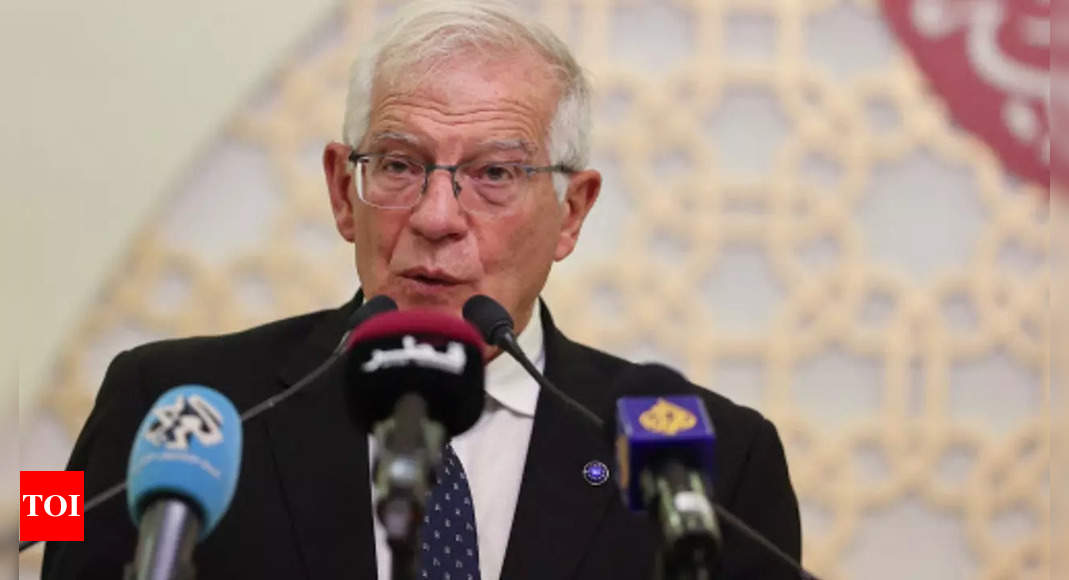

BRUSSELS: Afghanistan is facing a breakdown of its economic and social systems that risks turning into a humanitarian catastrophe, the European Union‘s foreign policy chief said on Sunday.
Avoiding the worst-case scenario would require the Taliban to comply with conditions that would enable more international assistance, Josep Borrell wrote in a blog post.
“Afghanistan is experiencing a serious humanitarian crisis and a socio-economic collapse is looming, which would be dangerous for Afghans, the region and international security,” Borrell wrote.
Food prices in the country have jumped more than 50% since the Taliban took power in August as the freezing of $9 billion of Afghanistan’s assets held in foreign central bank reserves and the withdrawal of foreign income stokes inflation.
The Afghan banking system is largely paralysed, with people unable to withdraw money, while the country’s health system – which was heavily dependent on foreign aid – is close to collapse, according to Borrell.
“If the situation continues and with winter approaching, this risks turning into a humanitarian catastrophe,” he wrote, adding that this could trigger mass migration into neighbouring states.
The 27-country EU has increased its humanitarian aid to Afghanistan since the Taliban took power, but halted its development assistance – a move also taken by other countries and the World Bank.
The EU response to the crisis would depend on the behaviour of the new Afghan authorities, Borrell said, and any resumption of relations would require compliance with conditions including human rights.
“This requires above all that the Taliban take the steps that will enable the international community to assist the Afghan people,” he said, adding that female staff from international agencies must be able to do their job.
Widespread reports of human rights abuses and the exclusion of girls from schools have dented optimism that the Taliban’s approach has changed since it first ran Afghanistan between 1996 and 2001.
Borrell met Qatari officials last week in the Qatari capital Doha, where the Taliban have a representation.
He said Qatar‘s contacts with the Taliban were aimed at moderating their behaviour, and urged Doha to use its contacts with them to ensure the “worst scenario” for Afghanistan could be avoided.
Avoiding the worst-case scenario would require the Taliban to comply with conditions that would enable more international assistance, Josep Borrell wrote in a blog post.
“Afghanistan is experiencing a serious humanitarian crisis and a socio-economic collapse is looming, which would be dangerous for Afghans, the region and international security,” Borrell wrote.
Food prices in the country have jumped more than 50% since the Taliban took power in August as the freezing of $9 billion of Afghanistan’s assets held in foreign central bank reserves and the withdrawal of foreign income stokes inflation.
The Afghan banking system is largely paralysed, with people unable to withdraw money, while the country’s health system – which was heavily dependent on foreign aid – is close to collapse, according to Borrell.
“If the situation continues and with winter approaching, this risks turning into a humanitarian catastrophe,” he wrote, adding that this could trigger mass migration into neighbouring states.
The 27-country EU has increased its humanitarian aid to Afghanistan since the Taliban took power, but halted its development assistance – a move also taken by other countries and the World Bank.
The EU response to the crisis would depend on the behaviour of the new Afghan authorities, Borrell said, and any resumption of relations would require compliance with conditions including human rights.
“This requires above all that the Taliban take the steps that will enable the international community to assist the Afghan people,” he said, adding that female staff from international agencies must be able to do their job.
Widespread reports of human rights abuses and the exclusion of girls from schools have dented optimism that the Taliban’s approach has changed since it first ran Afghanistan between 1996 and 2001.
Borrell met Qatari officials last week in the Qatari capital Doha, where the Taliban have a representation.
He said Qatar‘s contacts with the Taliban were aimed at moderating their behaviour, and urged Doha to use its contacts with them to ensure the “worst scenario” for Afghanistan could be avoided.
동현 배(Dong-hyun Bae)는 UlsanFocus.com의 필진으로, 지역 및 국내 주요 뉴스는 물론 정치, 경제, 기술, 스포츠, 문화·연예, 라이프스타일 등 다양한 분야를 다루고 있습니다. 독자들이 이해하기 쉬운 명확한 보도와 신뢰할 수 있는 정보 전달을 중요하게 생각하며, 시의성 있는 이슈와 일상에 도움이 되는 소식을 균형 있게 전합니다. 독자와 지역사회를 연결하는 의미 있는 이야기를 꾸준히 전달하는 데 집중하고 있습니다.