
Won’t recognise any Afghan government imposed by force: India, others at Doha meet | India News
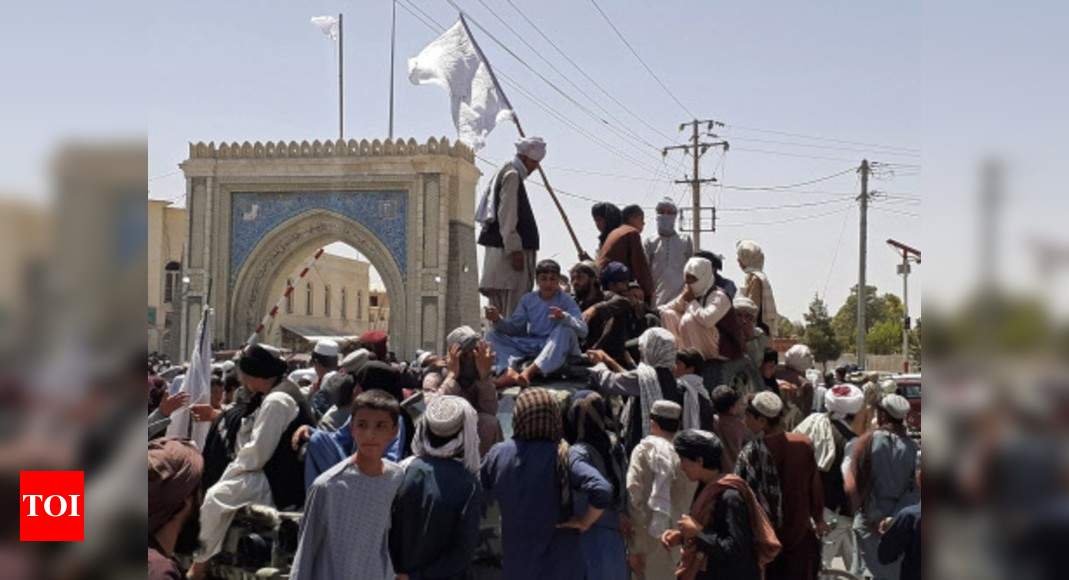

NEW DELHI: After a regional conference in Doha, India joined Qatar and several other countries in declaring that there will be no recognition of any military takeover of Afghanistan and in calling for an immediate and comprehensive ceasefire.
According to Qatar, China and Pakistan were among the countries who said they won’t recognise any violent takeover in a separate meeting in Doha on August 10 this week.
The bad news continued to pour in from Afghanistan Friday about the Taliban military offensive with reports saying that the insurgents were close to taking control of India’s showpiece infrastructure project Salma dam, also called India-Afghanistan Friendship Dam, in the Herat province. The dam had been inaugurated in 2016 by President Ashraf Ghani and PM Narendra Modi. The province capital and Afghanistan’s third-largest city, Herat city, also fell to the Taliban, reports from Afghanistan said.
Efforts to arrive at a political settlement in Doha have continued despite the apparent Taliban atrocities. Qatar held a meeting on August 10 first with the US, China, Uzbekistan, Pakistan, UK, UN and EU in Doha and followed it up with another meeting separately on August 12 with representatives of India, Germany, Norway, Tajikistan, Turkey, and Turkmenistan.
According to Qatar, all participants in both meetings urged the Afghan government and Taliban to take steps to build trust and accelerate efforts to reach a political settlement and comprehensive ceasefire as quickly as possible.
“Participants reaffirmed that they will not recognize any government in Afghanistan that is imposed through the use of military force,” said the Qatar foreign ministry. This is also contrary to reports that China was looking to recognise the Taliban after it takes over Kabul.
They also took note of statements by both sides on the “guiding principles” for a political settlement that included a commitment not to allow any individual or groups to use the soil of Afghanistan “to threaten the security of other countries”. This has been one of India’s primary concerns as the Taliban insurgents threaten to take over the country by force.
The other guiding principles include inclusive governance, respect for human rights, including the rights of women and minorities, a mechanism to deliver a representative government and respect for international law, including international humanitarian law.
The participants also raised “grave concerns” about reports from across Afghanistan about large numbers of civilian casualties and extra-judicial killings, also “widespread and credible allegations of human rights violations, all attacks (ground and air) against provincial capitals and cities, and the destruction of physical infrastructure that perpetuate conflict and make reconciliation efforts more difficult”.
According to Qatar, China and Pakistan were among the countries who said they won’t recognise any violent takeover in a separate meeting in Doha on August 10 this week.
The bad news continued to pour in from Afghanistan Friday about the Taliban military offensive with reports saying that the insurgents were close to taking control of India’s showpiece infrastructure project Salma dam, also called India-Afghanistan Friendship Dam, in the Herat province. The dam had been inaugurated in 2016 by President Ashraf Ghani and PM Narendra Modi. The province capital and Afghanistan’s third-largest city, Herat city, also fell to the Taliban, reports from Afghanistan said.
Efforts to arrive at a political settlement in Doha have continued despite the apparent Taliban atrocities. Qatar held a meeting on August 10 first with the US, China, Uzbekistan, Pakistan, UK, UN and EU in Doha and followed it up with another meeting separately on August 12 with representatives of India, Germany, Norway, Tajikistan, Turkey, and Turkmenistan.
According to Qatar, all participants in both meetings urged the Afghan government and Taliban to take steps to build trust and accelerate efforts to reach a political settlement and comprehensive ceasefire as quickly as possible.
“Participants reaffirmed that they will not recognize any government in Afghanistan that is imposed through the use of military force,” said the Qatar foreign ministry. This is also contrary to reports that China was looking to recognise the Taliban after it takes over Kabul.
They also took note of statements by both sides on the “guiding principles” for a political settlement that included a commitment not to allow any individual or groups to use the soil of Afghanistan “to threaten the security of other countries”. This has been one of India’s primary concerns as the Taliban insurgents threaten to take over the country by force.
The other guiding principles include inclusive governance, respect for human rights, including the rights of women and minorities, a mechanism to deliver a representative government and respect for international law, including international humanitarian law.
The participants also raised “grave concerns” about reports from across Afghanistan about large numbers of civilian casualties and extra-judicial killings, also “widespread and credible allegations of human rights violations, all attacks (ground and air) against provincial capitals and cities, and the destruction of physical infrastructure that perpetuate conflict and make reconciliation efforts more difficult”.
동현 배(Dong-hyun Bae)는 UlsanFocus.com의 필진으로, 지역 및 국내 주요 뉴스는 물론 정치, 경제, 기술, 스포츠, 문화·연예, 라이프스타일 등 다양한 분야를 다루고 있습니다. 독자들이 이해하기 쉬운 명확한 보도와 신뢰할 수 있는 정보 전달을 중요하게 생각하며, 시의성 있는 이슈와 일상에 도움이 되는 소식을 균형 있게 전합니다. 독자와 지역사회를 연결하는 의미 있는 이야기를 꾸준히 전달하는 데 집중하고 있습니다.